The Revolution Isn't in the Launch Notes
Claude Fable 5 launched this week, and my feed did exactly what it did six months ago, and six months before that. Half the posts treated it like a step change in human history. The other half complained about pricing and guardrails. By next week the script will be running again for whatever ships next.
Leonard
Leonard is Director and Builder at Caydev.

Claude Fable 5 launched this week, and my feed did exactly what it did six months ago, and six months before that. Half the posts treated it like a step change in human history. The other half complained about pricing and guardrails. By next week the script will be running again for whatever ships next.
I use these models every day to build software, run a company, and produce content, so you would think I'd feel each of these revolutions as they land. My honest take? I don't. Each new model is noticeably better than the last. I trust the output a little more, so I double-check a little less. It shows more intuition and needs fewer attempts to understand what I want. Those gains are real. But they are refinements rather than new superpowers, and the leaderboards agree: as of late May 2026, Artificial Analysis had the top three frontier models clustered within a single point of each other on its Intelligence Index.
So if the models are only getting incrementally smarter, why does my work look nothing like it did two years ago?
Smarter vs. Closer
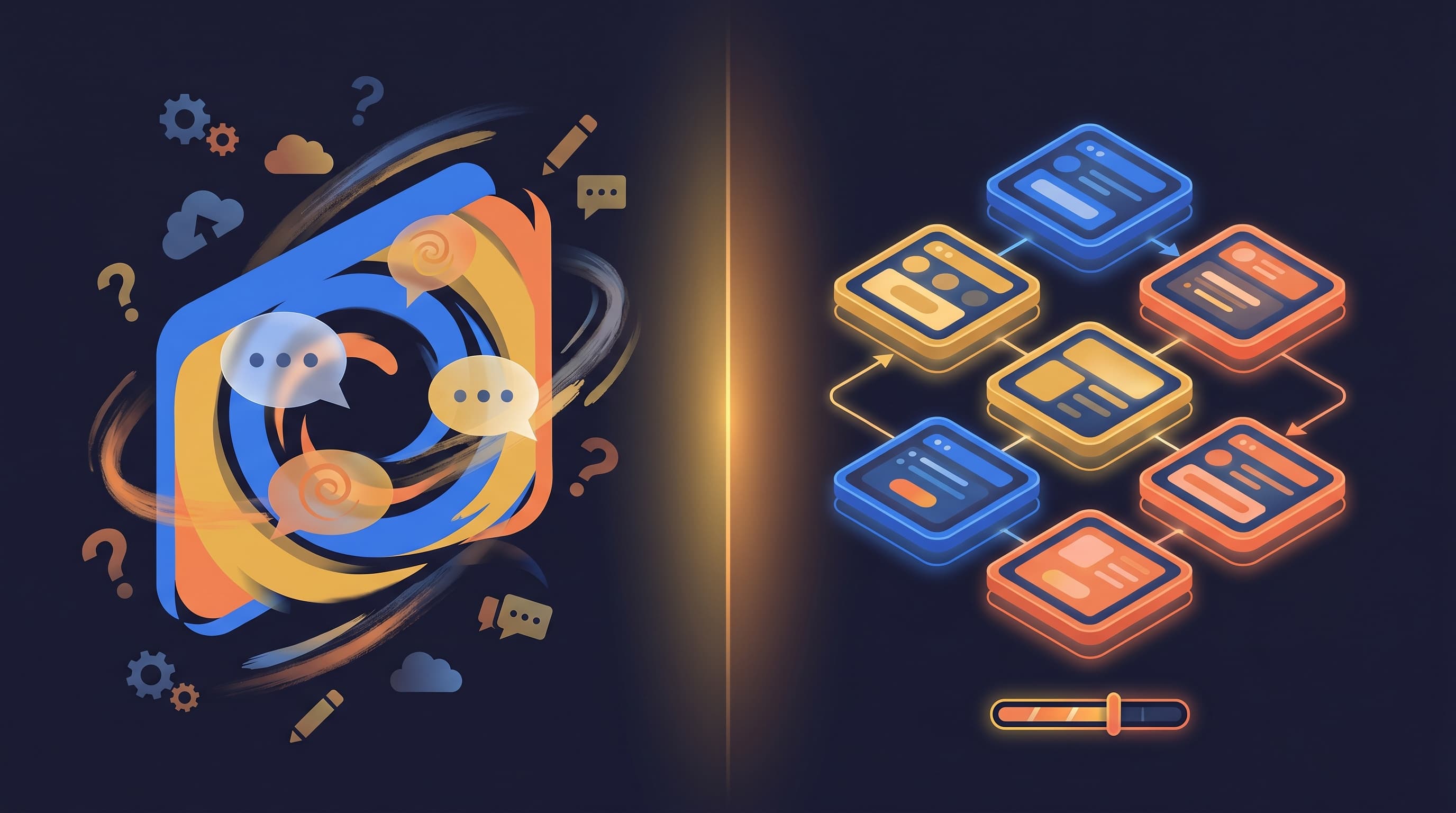
Here's the model I keep coming back to: the value of AI doesn't jump when the intelligence gets smarter. It jumps when the intelligence gets closer to your work.
Think of it as three distances between the model and your work:
The chat box.
You carry your work to the AI, copying things in and out and stitching the results together yourself.
The working directory.
The AI works where your work actually lives. It reads your files, edits them, runs the tools you run, and checks its own results.
The infrastructure.
The AI is wired into your systems and workflows, doing real work whether you're watching or not.
Launches still matter, because a better model makes the same workflows cheaper, faster, and more reliable. But every change that actually rewired how I work came from closing the distance.
The moment that really changed everything was the day I pointed Claude Code at my working directory and let it operate there. I stopped starting my drafting and content work in office apps, and I stopped hopping between tools to stitch a project together. If that way of working disappeared tomorrow, I would feel it immediately, the way you'd feel going back to paper after a decade of spreadsheets. Claude Code happens to be my tool of choice, but the shift isn't the vendor. It's that the model operates inside the work.
The coding benchmarks show this clearly. In early 2024, the best result on SWE-bench was around 13 percent. By mid 2026, frontier models running inside proper tool harnesses report above 70 percent. The models got smarter, and that mattered, but the capability only broke out when the model could inspect my repo, edit files, run the tests, and try again.
The Context Ceiling

For the practical knowledge work I do every day, the intelligence threshold has already been crossed. These models know more than I do across almost every domain I touch. I've stopped micro-managing and I just let the model do their thing, or as the cool kids say, "let it cook". Here's the outcome I need, tell me how you'd get there, then go. When I question a plan, the justification is usually better than what I had in mind.
The actual ceiling, far more often than raw intelligence, is what the model knows about your specific situation.
I think of it as the Context Ceiling: the quality of what you get out is capped by the weaker of two things, the model's capability or the context you give it. For years the model was the lower bar. Today, most of the disappointing AI output I see traces back to context. Ask a model to draft a proposal without telling it your margins, your past projects, or your positioning, and it will produce something off the mark and wrong for the business. That isn't a thinking failure. It's a briefing failure, and we keep saying it because the models aren't as smart as we expect them to be.
The people building these systems agree. Andrej Karpathy describes context engineering as "the delicate art and science of filling the context window with just the right information for the next step," and Anthropic's own engineers write about a finite "attention budget" that has to be spent carefully. Our remaining edge is that we carry years of long-term memory and know which piece matters right now. Feed more of that into the machine and the results improve faster than any model upgrade.
That's why I've stopped building around what any single model can do this month. I build the plumbing: how our files are laid out, what lives in which briefing documents, the workflows that carry our context. Then I plug intelligence into it the way I plug an appliance into electricity. When a better or cheaper model arrives, everything I've built improves the same day. Most of my tasks stopped needing a smarter model some time ago. What they need is intelligence that's cheaper, faster, and better briefed.
We're Still Early
A few weeks ago someone told me, in complete sincerity, that they'd never heard of Claude. I caught myself thinking: how is that possible? It was like someone who writes documents for a living never having heard of Microsoft Word. But the numbers say they're the normal one. Edison Research's tracking put Claude's awareness among US adults at just 21 percent this February, with weekly usage around 9 percent against ChatGPT's 43.
I think about that conversation a lot, because it's a reminder of how early we still are. The tools that completely changed how I work are ones most people haven't heard of, let alone tried. If this transition really is as big as Microsoft Office, then we're at the stage where most of the world hasn't installed it yet. For anyone learning these tools now, and anyone helping others catch up, that is the opportunity.
What To Do With This
If you take one thing from this post, change what you evaluate:
Stop asking "how smart is the new model?"
Ask "how close is the intelligence to my actual work?" If your answer is "a chat tab in my browser," that's your bottleneck, and no launch will fix it.
Audit your context before you blame the model.
When an output disappoints, ask what the model couldn't have known, then write it down somewhere it can read next time. Persistent context compounds; one-off prompts don't.
Pick one workflow and move it one distance closer.
Skip the grand "AI strategy" and start with one repeated piece of work: proposals, reporting, research briefs. Give the model the files, the rules, the examples, and a way to check its own output.
Build the system around the work, not around one model.
Put your effort into the files, briefs, and workflows that survive every model upgrade, and treat the intelligence as something you plug in.
Another model will launch soon, and the feed will tell you everything has changed again. Whether anything changes for you depends on a different question: now that capable intelligence is available on demand, how close to your work will you let it get?
Sources: Artificial Analysis Intelligence Index (May 2026); SWE-bench public leaderboards; Edison Research "AI User Metrics Report" with SSRS (May 2026); Andrej Karpathy on context engineering (June 2025); Anthropic Engineering, "Effective context engineering for AI agents" (September 2025).